
- Ace Hardware Home Services/
- Blogs/
- Repairing And Replacing Drain Lines
Drainage & LeaksHome Efficiency & ImprovementPlumbingJanuary 09, 2023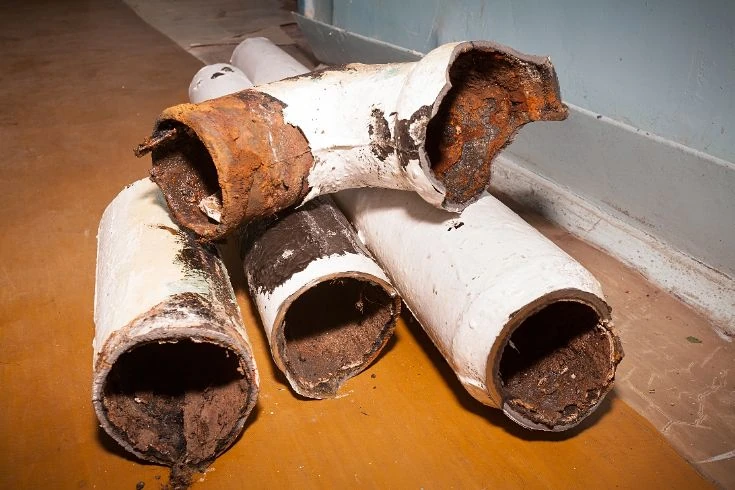
Repairing and Replacing Drain Lines
If your drains and/or toilets continue to clog or back up, this most often indicates a problem with drainpipes that must be corrected.
For the most part, sewer systems don’t require too much maintenance, apart from the occasional hair clog in a P-trap or grease buildup in a kitchen drain.
Here, we review some sewer line basics, common sewer line problems homeowners encounter, and options to solve them, including cleaning the lines, replacing pipes, and repairing fittings.
In the mid-20th century, just after WWII, Orangeburg piping was common in homes in some areas of the country. This nonmetallic piping made from bituminized fiber (essentially, heavy cardboard soaked in oil) was used in lieu of metals, which were scarce after the war. Some homes built from the mid-1940s into the 1960s used this type of pipe. Clay/terra cotta pipes were also used up until about 1960.
Once metals became available again, drain and sewer pipes were made from cast iron. In the mid-1980s, PVC plastic piping became the standard once this material became widely available for use in residential construction. PVC was preferred over cast iron for its lighter weight, easier handling and installation, and longevity: plastic does not rust and corrode like cast iron and, therefore, has a much longer lifespan. In some areas, a similar type of plastic called ABS was used instead of PVC.
When cast iron lines were installed, the pipes were joined with lead and a substance called oakum. This labor-intensive process involved packing gaps in the hub joints with the fibrous oakum material and pouring molten lead into the gap to create a watertight seal at the joint.
Later, the lead-oakum sealing method was replaced with rubber “donuts.” These donut-shaped compression gaskets joined the cast iron pipes. PVC rubber couplings, held in place with stainless steel clamps, were also used to join cast iron pipes. This was around when PVC/ABS became popular, and cast iron was on its way out.
What causes a broken cast iron drainpipe?
Heavy cast iron pipe is rigid and does not flex, but it does have some “give” at the connection joints. This makes cast iron pipes less vulnerable to force or ground movement breakage.
However, extensive soil movement can affect cast iron drain systems at their joints. If this happens, there is leakage at the joints every time the drain is used. This persistent leak under the ground in a home’s yard becomes a magnet for vegetation drawn to a new, consistent water source. Eventually, tree and shrub roots will grow towards and into the cracked pipe.
After a while, the pipe becomes clogged with roots. If the break is minimal, a sewer cleaning machine can remove enough roots to make the drain functional again. But this is only a temporary fix. The roots will grow back unless all vegetation is removed or the pipe is replaced.
How do “bellies” occur in cast iron sewer systems?
A belly is a sag or a low spot in a drain line. If the cast iron pipe is not properly bedded in at installation or if the ground moves significantly, it will flex at its joint. This creates dips or bellies in the horizontal line, which prevent the line from draining properly.
A belly in the line does not always cause a stoppage immediately; it may worsen gradually, causing more frequent clogs. Every situation is different, and the severity and frequency of clogs vary depending on usage and other variables.
Do cast iron drain pipes corrode?
The downside of using cast iron plumbing pipes is their life span. Constant moisture on the metal causes deterioration; eventually, the pipe will rust through and fail. We have found that older cast iron pipe manufactured before 1970 seems to be somewhat more durable than that made in the 70s and 80s. But no matter when it was made, cast iron pipe is susceptible to rust, both from the inside and the outside. The insides of these pipes tend to corrode faster than the outsides, probably accelerated by contact with strong chemical cleaning products.
Do cast iron drain pipes clog?
Cast iron sewer pipes are more susceptible to clogs because of their tendency to rust and corrode. The rough, craggy surface of a rusting pipe collects grease buildup, and rusty flakes cause particles to snag and catch rather than flow through.
New water-conserving plumbing fixtures commonly added during residential remodels accentuate this problem. “Low-flow” toilets are particularly problematic. While they flush well, there isn’t enough water to carry the waste through the rough, corroded cast iron piping to the city sewer system.
We see these problems frequently in the transitional suburban neighborhoods where homes are being purchased and extensively updated/remodeled. For this reason, we often suggest that an older malfunctioning toilet be rebuilt rather than replaced with a newer low-flow toilet when the home still has old cast iron sewer lines.
Can a rough, cast iron pipe be cleaned?
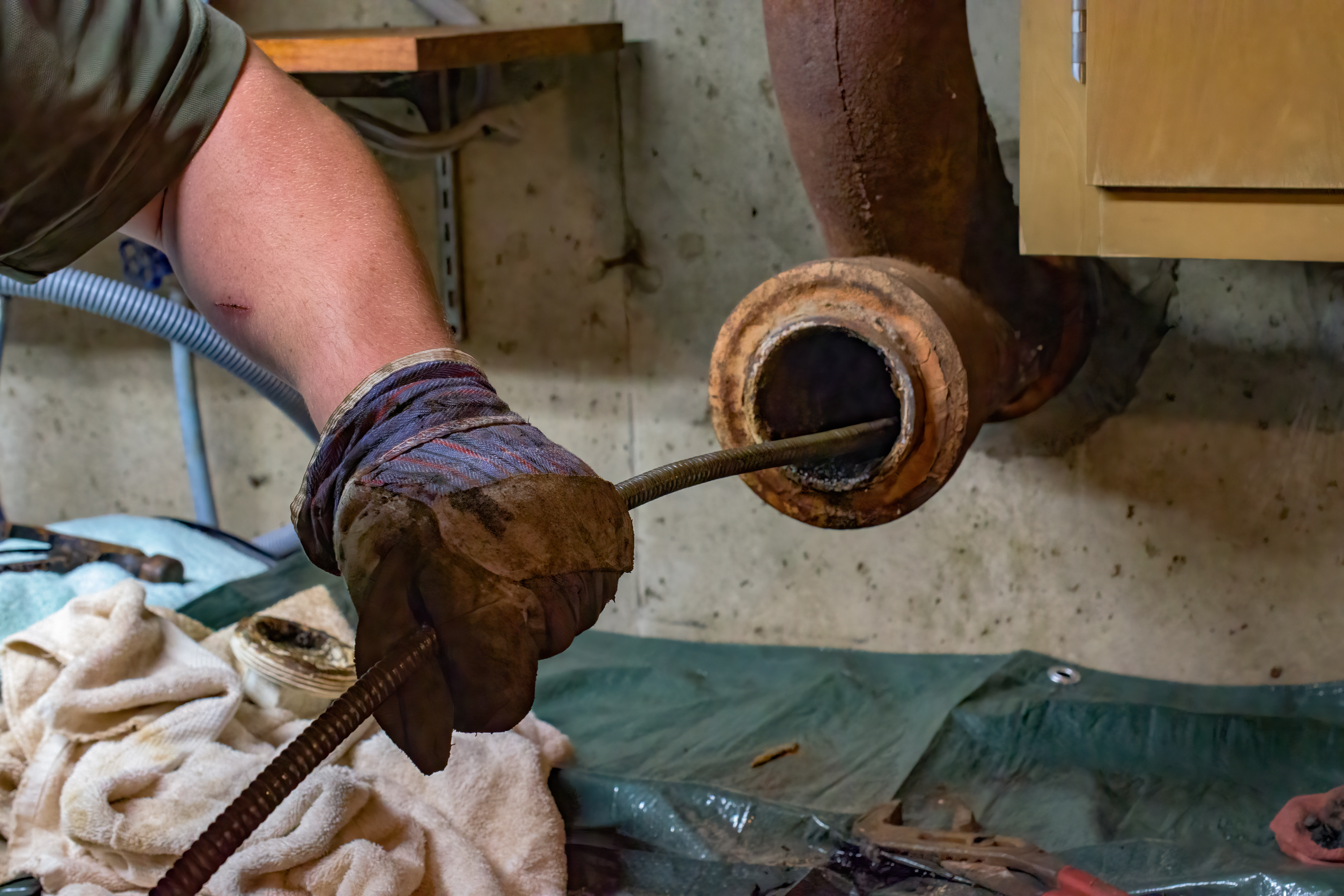
If cast iron drainpipes are still in good condition, that is, if they are not broken or seriously corroded, their interiors can be cleaned to improve draining. This is usually accomplished when a drain snake machine removes a clog.
After the stoppage is cleared, a jetting machine or a flex shaft machine may be used to brush and scrape the pipe interior and remove and wash away as much rust and buildup as possible.
Do I need to replace my cast iron drain system? How can cast iron be repaired?
Unfortunately, if you have cast iron plumbing pipes, you can expect their problems to worsen as time passes. Many homeowners with cast iron plumbing choose to replace large sections of pipe (or the whole system) rather than merely repair a single break. It can save money on labor to complete a larger repair once you are already digging in the yard rather than waiting and digging again and again.
Sections of new PVC/ABS pipe can be added to older cast iron pipe with reinforced rubber couplings for this purpose. Sometimes, the new pipes preserve the same layout as the original design. Other times, the drainpipes are moved to improve the layout and facilitate the repair.
PVC stands for Polyvinyl Chloride, one of the most commonly used polymer plastics worldwide. It is used in everything from toys and tablecloths to clothes and construction materials.
When used for plumbing, straight sections of PVC pipe are joined with various types of PVC fittings through solvent welding, a.k.a. PVC gluing. During this process, a liquid chemical solvent temporarily softens the surfaces to be joined. The softened fitting is placed over the two sections of the softened pipe, and they are clamped together until they fuse. Properly done, a reliable, water-tight seal is created.
Is PVC better than cast iron?
PVC pipes cost less, are cheaper to ship, are smoother, and don’t rust and decay like cast iron pipes. In these ways, PVC pipes have an advantage over cast iron for plumbing uses.
Because of these advantages, PVC became the industry standard for plumbing pipes once this material became readily available. PVCs lower cost enables builders to make bathrooms larger and place them anywhere in a home’s floor plan.
However, PVC drain systems do have some disadvantages over cast iron. They are noisier, more likely to be damaged by shifting soil or other trauma, and, unlike cast iron, flammable. PVC pipes also tend to be susceptible to leakage at their fittings.
What causes a broken PVC drainpipe?
They can separate if a PVC pipe isn’t connected correctly or if its connections experience a lot of force. But this isn’t too common. Long runs of PVC pipe will flex rather than break, which is a positive. The fittings are typically their weakest spot.
PVC fittings may crack when the ground shifts over time. If this happens, just as with cast iron pipes, vegetation in the area will be drawn toward the moisture from the leaking fittings, and roots will eventually clog the pipe.
Because PVC is more likely to be accidentally damaged during installation than cast iron, the plumbing code requires installers to take certain protective measures, such as installing nail plates. Despite this measure, PVC pipes are still sometimes damaged during construction or afterward when a homeowner screws or drills into a wall.
How do "bellies" occur in PVC sewer systems?
Because PVC pipe runs have some ability to flex, bellies can develop in the line if the pipe sections are not properly “bedded in” during construction. Bellies can also develop if the home’s foundation shifts. If this happens, the section of the PVC pipe that has the belly must be replaced to correct the problem.
Do I need to repipe my PVC drain system? How can PVC pipes be repaired?
The good news for homeowners is that most problems with PVC pipes do not require complete repiping of the system. A cracked fitting or pipe can be fixed by replacing only the damaged spot. The rest of the pipe is not subject to corrosion or other age-related problems. A complete repiping of a PVC plumbing system is only needed with severe damage to a slab foundation.
A PVC plumbing system uses bell and spigot-type piping. This can make for a more complicated repair process if fixed ends cannot be easily slid back and forth. In a typical repair, the broken fitting or section of pipe is cut out and replaced with the same pipe/fitting arrangement. The assembly is then tied back in with slip-type rubberized PVC couplings.
If several fixtures are backing up and/or you are repeatedly having problems with clogs, professional sewer cleaning equipment may be needed to correct the problem. The problem may also be a broken sewer line or roots in the line.
We have both drain cleaning machines and sewer inspection cameras. This means that our technicians can properly diagnose the problem, get the drains running smoothly again, and discuss your options for a permanent solution. To learn about pricing or to get on our schedule, call or get an estimate now!
For the most part, sewer systems don’t require too much maintenance, apart from the occasional hair clog in a P-trap or grease buildup in a kitchen drain.
Here, we review some sewer line basics, common sewer line problems homeowners encounter, and options to solve them, including cleaning the lines, replacing pipes, and repairing fittings.
Types of Sewer/Drain Pipes
What is the history of drain pipe material?
In the mid-20th century, just after WWII, Orangeburg piping was common in homes in some areas of the country. This nonmetallic piping made from bituminized fiber (essentially, heavy cardboard soaked in oil) was used in lieu of metals, which were scarce after the war. Some homes built from the mid-1940s into the 1960s used this type of pipe. Clay/terra cotta pipes were also used up until about 1960.Once metals became available again, drain and sewer pipes were made from cast iron. In the mid-1980s, PVC plastic piping became the standard once this material became widely available for use in residential construction. PVC was preferred over cast iron for its lighter weight, easier handling and installation, and longevity: plastic does not rust and corrode like cast iron and, therefore, has a much longer lifespan. In some areas, a similar type of plastic called ABS was used instead of PVC.
What materials for water and sewer lines are most common?
Depending on your neighborhood's development, there may be all cast iron, all PVC, or a mix of both. Many homes have cast iron drain lines running through the yard and below the slab foundations. Homes built in the mid-1980s and later may have PVC/ABS drain lines above the slab with cast iron still below. Newer construction homes were built in the 1990s, and later, they will have PVC or ABS drain lines.Cast Iron Sewer Pipe Problems
How were cast iron pipes installed?When cast iron lines were installed, the pipes were joined with lead and a substance called oakum. This labor-intensive process involved packing gaps in the hub joints with the fibrous oakum material and pouring molten lead into the gap to create a watertight seal at the joint.
Later, the lead-oakum sealing method was replaced with rubber “donuts.” These donut-shaped compression gaskets joined the cast iron pipes. PVC rubber couplings, held in place with stainless steel clamps, were also used to join cast iron pipes. This was around when PVC/ABS became popular, and cast iron was on its way out.
What causes a broken cast iron drainpipe?
Heavy cast iron pipe is rigid and does not flex, but it does have some “give” at the connection joints. This makes cast iron pipes less vulnerable to force or ground movement breakage.
However, extensive soil movement can affect cast iron drain systems at their joints. If this happens, there is leakage at the joints every time the drain is used. This persistent leak under the ground in a home’s yard becomes a magnet for vegetation drawn to a new, consistent water source. Eventually, tree and shrub roots will grow towards and into the cracked pipe.
After a while, the pipe becomes clogged with roots. If the break is minimal, a sewer cleaning machine can remove enough roots to make the drain functional again. But this is only a temporary fix. The roots will grow back unless all vegetation is removed or the pipe is replaced.
How do “bellies” occur in cast iron sewer systems?
A belly is a sag or a low spot in a drain line. If the cast iron pipe is not properly bedded in at installation or if the ground moves significantly, it will flex at its joint. This creates dips or bellies in the horizontal line, which prevent the line from draining properly.
A belly in the line does not always cause a stoppage immediately; it may worsen gradually, causing more frequent clogs. Every situation is different, and the severity and frequency of clogs vary depending on usage and other variables.
Do cast iron drain pipes corrode?
The downside of using cast iron plumbing pipes is their life span. Constant moisture on the metal causes deterioration; eventually, the pipe will rust through and fail. We have found that older cast iron pipe manufactured before 1970 seems to be somewhat more durable than that made in the 70s and 80s. But no matter when it was made, cast iron pipe is susceptible to rust, both from the inside and the outside. The insides of these pipes tend to corrode faster than the outsides, probably accelerated by contact with strong chemical cleaning products.
Do cast iron drain pipes clog?
Cast iron sewer pipes are more susceptible to clogs because of their tendency to rust and corrode. The rough, craggy surface of a rusting pipe collects grease buildup, and rusty flakes cause particles to snag and catch rather than flow through.
New water-conserving plumbing fixtures commonly added during residential remodels accentuate this problem. “Low-flow” toilets are particularly problematic. While they flush well, there isn’t enough water to carry the waste through the rough, corroded cast iron piping to the city sewer system.
We see these problems frequently in the transitional suburban neighborhoods where homes are being purchased and extensively updated/remodeled. For this reason, we often suggest that an older malfunctioning toilet be rebuilt rather than replaced with a newer low-flow toilet when the home still has old cast iron sewer lines.
Can a rough, cast iron pipe be cleaned?
If cast iron drainpipes are still in good condition, that is, if they are not broken or seriously corroded, their interiors can be cleaned to improve draining. This is usually accomplished when a drain snake machine removes a clog.
After the stoppage is cleared, a jetting machine or a flex shaft machine may be used to brush and scrape the pipe interior and remove and wash away as much rust and buildup as possible.
Do I need to replace my cast iron drain system? How can cast iron be repaired?
Unfortunately, if you have cast iron plumbing pipes, you can expect their problems to worsen as time passes. Many homeowners with cast iron plumbing choose to replace large sections of pipe (or the whole system) rather than merely repair a single break. It can save money on labor to complete a larger repair once you are already digging in the yard rather than waiting and digging again and again.
Sections of new PVC/ABS pipe can be added to older cast iron pipe with reinforced rubber couplings for this purpose. Sometimes, the new pipes preserve the same layout as the original design. Other times, the drainpipes are moved to improve the layout and facilitate the repair.
PVC Drain Line Problems
How are PVC drain pipes installed?PVC stands for Polyvinyl Chloride, one of the most commonly used polymer plastics worldwide. It is used in everything from toys and tablecloths to clothes and construction materials.
When used for plumbing, straight sections of PVC pipe are joined with various types of PVC fittings through solvent welding, a.k.a. PVC gluing. During this process, a liquid chemical solvent temporarily softens the surfaces to be joined. The softened fitting is placed over the two sections of the softened pipe, and they are clamped together until they fuse. Properly done, a reliable, water-tight seal is created.
Is PVC better than cast iron?
PVC pipes cost less, are cheaper to ship, are smoother, and don’t rust and decay like cast iron pipes. In these ways, PVC pipes have an advantage over cast iron for plumbing uses.
Because of these advantages, PVC became the industry standard for plumbing pipes once this material became readily available. PVCs lower cost enables builders to make bathrooms larger and place them anywhere in a home’s floor plan.
However, PVC drain systems do have some disadvantages over cast iron. They are noisier, more likely to be damaged by shifting soil or other trauma, and, unlike cast iron, flammable. PVC pipes also tend to be susceptible to leakage at their fittings.
What causes a broken PVC drainpipe?
They can separate if a PVC pipe isn’t connected correctly or if its connections experience a lot of force. But this isn’t too common. Long runs of PVC pipe will flex rather than break, which is a positive. The fittings are typically their weakest spot.
PVC fittings may crack when the ground shifts over time. If this happens, just as with cast iron pipes, vegetation in the area will be drawn toward the moisture from the leaking fittings, and roots will eventually clog the pipe.
Because PVC is more likely to be accidentally damaged during installation than cast iron, the plumbing code requires installers to take certain protective measures, such as installing nail plates. Despite this measure, PVC pipes are still sometimes damaged during construction or afterward when a homeowner screws or drills into a wall.
How do "bellies" occur in PVC sewer systems?
Because PVC pipe runs have some ability to flex, bellies can develop in the line if the pipe sections are not properly “bedded in” during construction. Bellies can also develop if the home’s foundation shifts. If this happens, the section of the PVC pipe that has the belly must be replaced to correct the problem.
Do I need to repipe my PVC drain system? How can PVC pipes be repaired?
The good news for homeowners is that most problems with PVC pipes do not require complete repiping of the system. A cracked fitting or pipe can be fixed by replacing only the damaged spot. The rest of the pipe is not subject to corrosion or other age-related problems. A complete repiping of a PVC plumbing system is only needed with severe damage to a slab foundation.
A PVC plumbing system uses bell and spigot-type piping. This can make for a more complicated repair process if fixed ends cannot be easily slid back and forth. In a typical repair, the broken fitting or section of pipe is cut out and replaced with the same pipe/fitting arrangement. The assembly is then tied back in with slip-type rubberized PVC couplings.
DIY Drain Cleaning vs. Professional Drain Pipe Repair and Service
If a single plumbing fixture backs up repeatedly, you might have a problem with hair or buildup in its drain assembly or P-trap. You can probably clean this out manually with an inexpensive drain tool. Alternatively, you may need to clean manually after you disassemble the sink's slip joint connections.If several fixtures are backing up and/or you are repeatedly having problems with clogs, professional sewer cleaning equipment may be needed to correct the problem. The problem may also be a broken sewer line or roots in the line.
We have both drain cleaning machines and sewer inspection cameras. This means that our technicians can properly diagnose the problem, get the drains running smoothly again, and discuss your options for a permanent solution. To learn about pricing or to get on our schedule, call or get an estimate now!
