
- Ace Hardware Home Services/
- Blogs/
- Oil To Gas Heating Conversion Philadelphia
Home Efficiency & ImprovementHeatingHVAC Installation & ReplacementOctober 30, 2026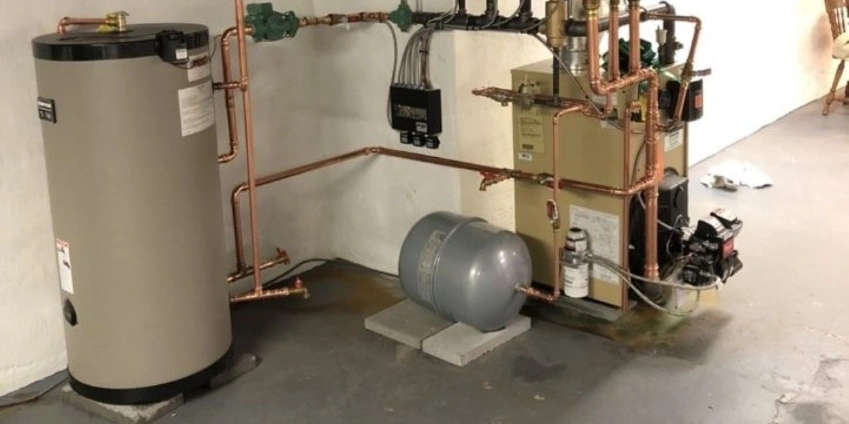
Should I Convert My Philadelphia-Area Home from Oil to Natural Gas?
If your Philadelphia-area home still relies on heating oil, you may be wondering whether converting from oil to natural gas makes financial sense.
For some homeowners, an oil-to-gas conversion can reduce the ongoing hassle of fuel deliveries, provide access to high-efficiency heating equipment and potentially lower heating costs. But the economics depend heavily on your home, available gas service, current heating system, equipment selected and conversion costs.
There may also be rebates or utility incentives available to help offset part of the investment.
Here are the questions homeowners in Philadelphia, Bucks County, Montgomery County, Delaware County, Chester County and surrounding communities should consider before making the switch.
Depending on the existing heating equipment and condition of the system, the project could involve replacing the heating equipment rather than simply changing the fuel source.
That's why the first step should be an evaluation of the home's existing equipment, fuel supply and natural-gas availability before choosing a system.
Potential savings depend on factors such as:
PECO Gas Heat Conversion offers residential calculators specifically comparing oil versus natural gas and includes a conversion payback calculator.
Find out specifics for your home using PECO’s calculator here: Gas Heat Conversion
Rather than choosing natural gas based on a generalized savings claim, homeowners should compare their actual annual oil usage and costs against estimated natural-gas consumption and the total conversion investment.
Find Philadelphia Gas Works information here: Efficiency Incentives
Additional rebates for eligible gas water-heating equipment
Eligibility varies by program and equipment, so homeowners should verify current requirements before selecting equipment or assuming an incentive will apply.
Find PECO rebate information here: Natural Gas Rebates and Credits
Before selecting equipment, homeowners need to determine whether natural-gas service is available at their property.
PECO recommends checking natural-gas availability first. If a home already uses gas for something such as cooking, the existing gas service may still need to be evaluated because the line may not have enough capacity to support new heating equipment.
That makes gas availability and capacity an important early step in the conversion process.
That is one of the most important questions to ask your HVAC contractor.
The right approach depends on:
Homeowners should ask for options rather than assuming that the lowest upfront-cost conversion is automatically the best long-term solution.
Ask your contractor:
Getting those answers before accepting a proposal can help prevent unexpected costs later.
A property that already has adequate natural-gas service may have a very different project than a home where new utility service needs to be established.
The overall project can involve coordination between the homeowner, utility and HVAC or plumbing contractor, so homeowners should ask for a clear explanation of what the contractor controls versus what depends on the utility or permitting process.
Before hiring a contractor, ask:
Do you regularly perform oil-to-gas conversions?
Experience with both the existing oil system and the proposed gas equipment is important.
Will you evaluate the entire heating system?
The contractor should be able to explain why the recommended equipment and approach make sense for your particular home.
Will you help determine which rebates I qualify for?
Available incentives may depend on the gas utility, equipment type and efficiency level.
What's included in the quote?
Ask specifically about:
Will you coordinate with my gas utility?
Understanding who is responsible for each portion of the project can help prevent delays and surprises.
At Ace Hardware Home Services, we are here to support our customers every step of the way. We help you fully understand your home, options, potential rebates, and help you coordinate with your utility company to make sure the project goes smoothly.
Look beyond the price of the new equipment.
A useful comparison should consider:
Current annual oil cost
vs.
Estimated annual natural-gas cost
Then factor in:
Total conversion cost − eligible rebates and incentives = net project investment
That gives you a much better foundation for evaluating the potential payback than simply comparing today's oil and natural-gas prices.
Homeowners considering PECO service can also use its conversion calculator as one reference point when evaluating the economics.
Ace Hardware Home Services' Philadelphia operation works with oil and gas boilers, including steam, hot-water and combination boiler systems, and performs oil-to-gas conversions involving burners and full systems.
If you're considering switching from oil to natural gas, a home heating evaluation can help determine:
Schedule an oil-to-gas conversion consultation with Ace Hardware Home Services to understand your options before making the switch.
It can be, particularly when an older oil heating system already needs replacement. The answer depends on fuel usage, equipment efficiency, natural-gas availability, installation costs and available incentives.
How much money can I save by switching from oil to natural gas?
Savings vary by household. PECO provides an Oil vs. Natural Gas calculator that homeowners can use to estimate potential fuel savings based on their situation.
Are there rebates for converting from oil to gas in Philadelphia?
Yes. PGW currently lists a $500 natural-gas home-heating conversion credit for qualifying customers, while PECO lists a $400 natural-gas heating conversion rebate for qualifying customers. Equipment rebates may also be available.
Do I need a new furnace or boiler when converting?
Not every home has the same requirements. A qualified heating contractor should evaluate the existing equipment and explain the available conversion or replacement options.
Can I convert an oil boiler to natural gas?
AHHS Philadelphia's documented capabilities include oil-to-gas conversions as well as oil and gas steam, hot-water and combination boilers.
What should I do first if I'm considering a conversion?
Confirm that natural gas is available at the property and have the existing heating system evaluated. If gas already serves the home, the existing service may still need a capacity review before heating equipment is added.
For some homeowners, an oil-to-gas conversion can reduce the ongoing hassle of fuel deliveries, provide access to high-efficiency heating equipment and potentially lower heating costs. But the economics depend heavily on your home, available gas service, current heating system, equipment selected and conversion costs.
There may also be rebates or utility incentives available to help offset part of the investment.
Here are the questions homeowners in Philadelphia, Bucks County, Montgomery County, Delaware County, Chester County and surrounding communities should consider before making the switch.
What Is an Oil-to-Gas Conversion?
An oil-to-gas conversion replaces or modifies an oil-fired heating system so the home can use natural gas as its primary heating fuel.Depending on the existing heating equipment and condition of the system, the project could involve replacing the heating equipment rather than simply changing the fuel source.
That's why the first step should be an evaluation of the home's existing equipment, fuel supply and natural-gas availability before choosing a system.
Can Converting from Oil to Natural Gas Lower My Heating Costs?
It can, but there isn't one savings number that applies to every Philadelphia-area home.Potential savings depend on factors such as:
• Current heating-oil consumption
• Oil and natural-gas prices
• Age and efficiency of the existing heating system
• Efficiency of the new gas equipment
• Home size and insulation
• Thermostat settings and household comfort preferences
• Cost of establishing or upgrading natural-gas service
• Total installation and conversion cost
PECO Gas Heat Conversion offers residential calculators specifically comparing oil versus natural gas and includes a conversion payback calculator.
Find out specifics for your home using PECO’s calculator here: Gas Heat Conversion
Rather than choosing natural gas based on a generalized savings claim, homeowners should compare their actual annual oil usage and costs against estimated natural-gas consumption and the total conversion investment.
What Rebates Are Available for Oil-to-Gas Conversion in Philadelphia?
This is where location makes a major difference.Philadelphia Gas Works customers
Philadelphia Gas Works currently states that residential customers who convert their home or duplex to natural-gas heating may qualify for a $500 credit toward their PGW account. PGW also lists high-efficiency equipment incentives, including rebates of up to $500 for qualifying furnaces and $1,500 for qualifying boilers. Eligibility requirements apply.Find Philadelphia Gas Works information here: Efficiency Incentives
PECO natural-gas customers
For qualifying PECO customers, current incentives include:• $400 natural-gas heating conversion rebate
• $400 qualifying ENERGY STAR+ natural-gas furnace
• $100 qualifying ENERGY STAR natural-gas furnace
• $500 qualifying ENERGY STAR+ combination boiler
• $250 qualifying ENERGY STAR natural-gas boiler
Additional rebates for eligible gas water-heating equipment
Eligibility varies by program and equipment, so homeowners should verify current requirements before selecting equipment or assuming an incentive will apply.
Find PECO rebate information here: Natural Gas Rebates and Credits
Is Natural Gas Available at My Philadelphia-Area Home?
Not necessarily.Before selecting equipment, homeowners need to determine whether natural-gas service is available at their property.
PECO recommends checking natural-gas availability first. If a home already uses gas for something such as cooking, the existing gas service may still need to be evaluated because the line may not have enough capacity to support new heating equipment.
That makes gas availability and capacity an important early step in the conversion process.
What Are the Benefits of Converting from Oil to Natural Gas?
Convenience
Natural gas is delivered directly through the utility's gas system, eliminating the need to schedule heating-oil deliveries or keep a fuel tank filled. PECO specifically highlights the ability to eliminate fuel deliveries and the need for a fuel tank as benefits of natural gas.Potential Energy Savings
The financial benefit varies by home, but homeowners can compare their current fuel against natural gas using PECO's Oil vs. Natural Gas and conversion payback calculators.Access to High-Efficiency Equipment
Converting also gives homeowners the opportunity to replace an older heating system with qualifying high-efficiency equipment. Both PGW and PECO currently offer incentives for certain high-efficiency natural-gas heating systems.Lower Carbon Emissions Than Heating Oil
According to PECO, natural gas produces about 116.6 pounds of CO2 per million BTUs, compared with 163.4 pounds for heating oil.Should I Replace My Oil Furnace or Boiler, or Convert the Existing System?
That is one of the most important questions to ask your HVAC contractor.
The right approach depends on:
• Age of the existing furnace or boiler
• Equipment condition
• Current system efficiency
• Chimney and venting configuration
• Heating requirements of the home
• Existing ductwork or hydronic system
• Available natural-gas capacity
• Long-term repair and maintenance outlook
Homeowners should ask for options rather than assuming that the lowest upfront-cost conversion is automatically the best long-term solution.
What Happens to My Oil Tank After Converting to Gas?
The existing oil-storage system should be part of the conversion discussion from the beginning.Ask your contractor:
• Does the tank need to be removed?
• Who handles the tank work?
• What happens to remaining heating oil?
• Is the tank above ground or underground?
• Are additional specialists or permits required?
• Is tank work included in the conversion estimate?
Getting those answers before accepting a proposal can help prevent unexpected costs later.
How Long Does an Oil-to-Gas Conversion Take?
The scope varies considerably from home to home.A property that already has adequate natural-gas service may have a very different project than a home where new utility service needs to be established.
The overall project can involve coordination between the homeowner, utility and HVAC or plumbing contractor, so homeowners should ask for a clear explanation of what the contractor controls versus what depends on the utility or permitting process.
What Should I Look for in an Oil-to-Gas Conversion Contractor?
Oil-to-gas conversion involves more than simply choosing a new furnace or boiler.Before hiring a contractor, ask:
Do you regularly perform oil-to-gas conversions?
Experience with both the existing oil system and the proposed gas equipment is important.
Will you evaluate the entire heating system?
The contractor should be able to explain why the recommended equipment and approach make sense for your particular home.
Will you help determine which rebates I qualify for?
Available incentives may depend on the gas utility, equipment type and efficiency level.
What's included in the quote?
Ask specifically about:
• New heating equipment
• Gas piping
• Electrical work
• Venting
• Thermostat
• Oil equipment removal
• Oil tank considerations
• Permits
• Startup and testing
• Warranty
• Rebate documentation
Will you coordinate with my gas utility?
Understanding who is responsible for each portion of the project can help prevent delays and surprises.
At Ace Hardware Home Services, we are here to support our customers every step of the way. We help you fully understand your home, options, potential rebates, and help you coordinate with your utility company to make sure the project goes smoothly.
How Do I Know if Converting from Oil to Gas Is Worth It?
Look beyond the price of the new equipment.
A useful comparison should consider:
Current annual oil cost
vs.
Estimated annual natural-gas cost
Then factor in:
Total conversion cost − eligible rebates and incentives = net project investment
That gives you a much better foundation for evaluating the potential payback than simply comparing today's oil and natural-gas prices.
Homeowners considering PECO service can also use its conversion calculator as one reference point when evaluating the economics.
Can Ace Hardware Home Services Help With an Oil-to-Gas Conversion in Philadelphia?
Ace Hardware Home Services' Philadelphia operation works with oil and gas boilers, including steam, hot-water and combination boiler systems, and performs oil-to-gas conversions involving burners and full systems.
If you're considering switching from oil to natural gas, a home heating evaluation can help determine:
• Whether conversion makes sense for your existing system
• What equipment options are available
• Whether your gas service needs to be evaluated
• Which current utility rebates may apply
• What should be included in the overall project
Schedule an oil-to-gas conversion consultation with Ace Hardware Home Services to understand your options before making the switch.
Frequently Asked Questions About Oil-to-Gas Conversion in Philadelphia
Is converting from oil to natural gas worth it?It can be, particularly when an older oil heating system already needs replacement. The answer depends on fuel usage, equipment efficiency, natural-gas availability, installation costs and available incentives.
How much money can I save by switching from oil to natural gas?
Savings vary by household. PECO provides an Oil vs. Natural Gas calculator that homeowners can use to estimate potential fuel savings based on their situation.
Are there rebates for converting from oil to gas in Philadelphia?
Yes. PGW currently lists a $500 natural-gas home-heating conversion credit for qualifying customers, while PECO lists a $400 natural-gas heating conversion rebate for qualifying customers. Equipment rebates may also be available.
Do I need a new furnace or boiler when converting?
Not every home has the same requirements. A qualified heating contractor should evaluate the existing equipment and explain the available conversion or replacement options.
Can I convert an oil boiler to natural gas?
AHHS Philadelphia's documented capabilities include oil-to-gas conversions as well as oil and gas steam, hot-water and combination boilers.
What should I do first if I'm considering a conversion?
Confirm that natural gas is available at the property and have the existing heating system evaluated. If gas already serves the home, the existing service may still need a capacity review before heating equipment is added.
