- Ace Hardware Home Services/
- Blogs/
- What Tools Do Plumbers Use To Clear A Clog
Kitchen PlumbingBathroom PlumbingPlumbingJanuary 04, 2023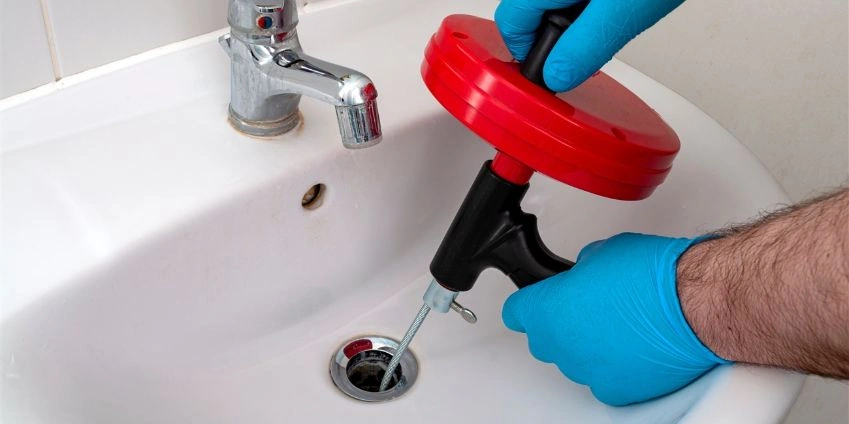
What Tools Do Plumbers Use to Clear a Clog?
Clog-busting technology has advanced greatly in the past decade. Learn about drain-cleaning machines and their capabilities!
Some of the newer drain-cleaning tools available to today’s plumbers include hydrojetters and flex-shaft machines. But are these gadgets better than the old-school snake? If so, what makes them better, and when is the right situation to use each?
Below, we review drainpipe cleaning technologies and how to choose the best one for each situation.
There are two categories of snake machines: drum and sectional machines. The drum machine has one long, rotating cable that is coiled up inside the machine. The sectional machine has shorter cables (stored coiled in the machine) that connect to extend the snake's reach. The user can add and remove lengths of cable as needed.
With these two machines, a skilled user can solve many drain problems with just a simple auger bit. An experienced user can bust up and wash away most clogs. New attachments, such as spade-shaped cutter bits and C-shaped cutter heads, further extend these machines’ uses, enabling them to remove grease buildup and significant toilet tissue clogs. Additional attachments, such as shark-tooth and saw-tooth cutter bits, remove roots in drain lines.
Some plumbers who specialize in drain cleaning prefer certain tools and techniques. They unclog many drains each day and become so familiar with the equipment that they can tell when the snake’s cable goes through a pipe fitting and when it hits a clog, even though they can’t see inside the pipe! Sometimes, they can even identify what is stopping the drain just by feeling!
Drain cleaning machines will likely always be a plumber’s first line of defense against clogs. However, some issues they present have caused professionals in the trade to search for newer and better ways to solve certain problems.
Another limitation of snake machines is that they can get lodged in the drain if used improperly. For example, if too small a cable is used in a large pipe, the twisting cable may become knotted, making the device extremely difficult to remove from the pipe. Likewise, if a pipe is damaged, the bit on the end of the snake can snag on the pipe’s broken places and be tough to get out.
Lastly, it can be time-consuming to remove and wash away a heavy buildup of grease, dirt, sludge, etc., inside a drainpipe when using a traditional snake and relying on gravity to pull the water through the pipe.
The hydrometer is a newer innovation in drain cleaning technology. It was created to address the limitations of the traditional snake machine. The device clears clogs with highly pressurized water (1200-3000 psi) and scours grease, sludge, and debris stuck inside drainpipes. The hydrojetter’s hose uses pressurized water to propel itself down the drain.
Both gas- and electric-powered hydrojetters are available. As you would expect, they are more expensive than traditional drain machines. Hydro jetters typically are rated 1 ½ to 5 gallons per minute. Models with a higher GPM can clean sludge buildup much faster than lower-rated models.
Hydro jetters have cables and various head attachments. Most attachments combine rear- and forward-facing jets, which clean pipes and move the hose down the pipe simultaneously.
Hydro jetters are not perfect, however. They are not as effective at clearing large, stubborn clogs because the device does not have the torque of a correctly sized drain snake. Another limitation of the hydro jetter: unlike some drain snakes, it cannot retrieve an object from a drain.
The hydro jetter is an excellent tool for removing grease and scale buildup from pipes, but it is still not well-suited to removing rust on the inside of cast-iron drainpipes.
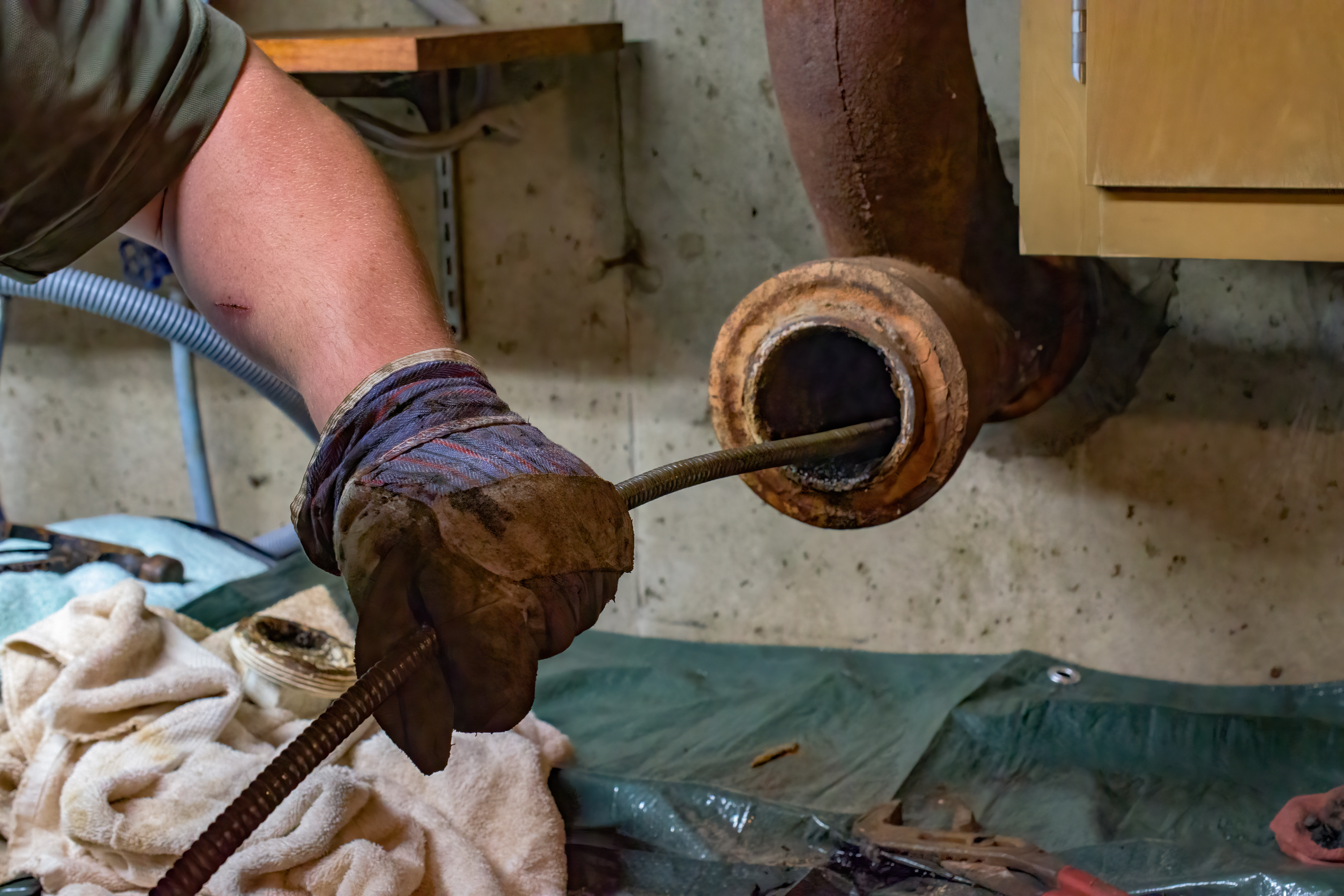
Flex shaft cables range from 50 feet to more than 100 feet. Flex shaft machines are not as versatile as the water jet machines, but they come in several sizes that will clean pipes from 1 ¼” to 6″.
Flex shaft machines were hard to find not so long ago, but they are now available from several drain cleaning equipment manufacturers, including Spartan Tool, Rigid, and General Pipe Cleaners.
Though they can be used to remove stoppages, that’s not their forte. Flex machines have less torque and are less effective on heavy-duty clogs. Most drain cleaning pros would probably go to their traditional drain snake first to handle that job. The flex shaft machine is an excellent choice when a drain camera reveals heavy build-up inside sewer pipes. The flex shaft machine can be used with an inspection camera simultaneously for maximum control of the cleaning project.
You might be able to remove the clog with a simple tool from the hardware store. You may also be able to solve the problem by taking apart the slip joint pipes and cleaning them manually. (Caution: this can get messy!) Other clogs can be removed with a small, hand-held drain snake from your local hardware store. (FYI: These snakes are typically 25 feet in length maximum, so they only work on smaller pipes.)
For a simple toilet clog or sink clog, you try to clear it with a closet or toilet auger. These can also be purchased at your local hardware store. This only works if the clog is in the toilet or the drain pipe just beyond. Even the model rated “professional” is only 6 feet long.
If these methods are unsuccessful, if multiple fixtures are stopped, or if the drain does not back up until the water has been running, the clog is likely farther away from the fixture, and a larger drain-clearing machine will be needed. This is probably the time to call in reinforcements– a licensed plumber.
A skilled plumber can make it look simple, but there are still many places to get tripped up. Where is the best place to access the clog? Is there a cleanout? Is there a broken pipe? What if the snake’s cable gets jammed or snagged on the pipe? Don’t spin your wheels without a licensed plumber with the experience and local knowledge to do the job right.
We are equipped with a variety of drain cleaning tools and drain camera inspection equipment. So we can get your drain cleared right the first time and let you get back to your day. If it turns out there is more to it than a simple clog (such as scale buildup or a broken sewer pipe), we can diagnose the problem correctly and give you several options for fixing it.
You need an experienced plumber you can trust. For pricing and schedule availability, give us a call today!
Some of the newer drain-cleaning tools available to today’s plumbers include hydrojetters and flex-shaft machines. But are these gadgets better than the old-school snake? If so, what makes them better, and when is the right situation to use each?
Below, we review drainpipe cleaning technologies and how to choose the best one for each situation.
How Do Drain Snake Machines Work?
The traditional drain snake machine isn’t too complicated. A strong motor turns a steel cable that travels down into the drainpipe. Various attachment heads can be added. The head attachment rotates forcefully, removing whatever is clogging the drainpipe.There are two categories of snake machines: drum and sectional machines. The drum machine has one long, rotating cable that is coiled up inside the machine. The sectional machine has shorter cables (stored coiled in the machine) that connect to extend the snake's reach. The user can add and remove lengths of cable as needed.
With these two machines, a skilled user can solve many drain problems with just a simple auger bit. An experienced user can bust up and wash away most clogs. New attachments, such as spade-shaped cutter bits and C-shaped cutter heads, further extend these machines’ uses, enabling them to remove grease buildup and significant toilet tissue clogs. Additional attachments, such as shark-tooth and saw-tooth cutter bits, remove roots in drain lines.
Are Traditional Drain Machines the Best?
Drain snake machines have long been a plumber's best friend when removing stoppages and getting drains flowing smoothly again. They are very useful for many drain-clearing tasks, from retrieving foreign objects in the drain to cutting out tree roots. In the hands of a skilled technician, it’s hard to think of a more versatile or powerful tool for unclogging drains than the right drain snake machine.Some plumbers who specialize in drain cleaning prefer certain tools and techniques. They unclog many drains each day and become so familiar with the equipment that they can tell when the snake’s cable goes through a pipe fitting and when it hits a clog, even though they can’t see inside the pipe! Sometimes, they can even identify what is stopping the drain just by feeling!
Drain cleaning machines will likely always be a plumber’s first line of defense against clogs. However, some issues they present have caused professionals in the trade to search for newer and better ways to solve certain problems.
How Effectively Does a Drain Snake Clean Pipes?
Many homes built in the last part of the 20th century have cast-iron sewer pipes. One thing a drain snake does not do well is remove scale buildup on the interior of cast-iron pipes. A snake can clear the clog and get the drain working again if the pipe is still somewhat sound, but it cannot remove years of rust and corrosion from the inside of a cast-iron pipe.Another limitation of snake machines is that they can get lodged in the drain if used improperly. For example, if too small a cable is used in a large pipe, the twisting cable may become knotted, making the device extremely difficult to remove from the pipe. Likewise, if a pipe is damaged, the bit on the end of the snake can snag on the pipe’s broken places and be tough to get out.
Lastly, it can be time-consuming to remove and wash away a heavy buildup of grease, dirt, sludge, etc., inside a drainpipe when using a traditional snake and relying on gravity to pull the water through the pipe.
What Are Hydro Jetter Drain Machines?
The hydrometer is a newer innovation in drain cleaning technology. It was created to address the limitations of the traditional snake machine. The device clears clogs with highly pressurized water (1200-3000 psi) and scours grease, sludge, and debris stuck inside drainpipes. The hydrojetter’s hose uses pressurized water to propel itself down the drain.Both gas- and electric-powered hydrojetters are available. As you would expect, they are more expensive than traditional drain machines. Hydro jetters typically are rated 1 ½ to 5 gallons per minute. Models with a higher GPM can clean sludge buildup much faster than lower-rated models.
Hydro jetters have cables and various head attachments. Most attachments combine rear- and forward-facing jets, which clean pipes and move the hose down the pipe simultaneously.
What Are the Pros and Cons of Hydro Jetters?
Versatile hydro jetters can clean and clear sewer pipes ranging from 2″ to 10″ in diameter. They save time because jets of water scour the pipes while flushing debris through simultaneously. This time savings can add up, especially if a lot of debris in the drainpipe must be cleared.Hydro jetters are not perfect, however. They are not as effective at clearing large, stubborn clogs because the device does not have the torque of a correctly sized drain snake. Another limitation of the hydro jetter: unlike some drain snakes, it cannot retrieve an object from a drain.
The hydro jetter is an excellent tool for removing grease and scale buildup from pipes, but it is still not well-suited to removing rust on the inside of cast-iron drainpipes.
What Are Flex Shaft Machines?
Flex shaft machines are another recent innovation for descaling old sewer pipes. Also known as flexi-rooters or “chain knockers,” they have a stationary outer sheet fed into the drainpipe. Then, a flexible core cable spins at high speeds through the sheath and into the sewer pipe. Like most drain augers, it has detachable heads. The most popular head, the “chain knocker,” has a flared design that scrapes the side of the pipe as the cable spins.Flex shaft cables range from 50 feet to more than 100 feet. Flex shaft machines are not as versatile as the water jet machines, but they come in several sizes that will clean pipes from 1 ¼” to 6″.
Flex shaft machines were hard to find not so long ago, but they are now available from several drain cleaning equipment manufacturers, including Spartan Tool, Rigid, and General Pipe Cleaners.
When Should You Use A Flex Shaft Machine?
The flex shaft machine’s cable spin rate sets it apart. Some models spin at over 2000 RPMs, which makes them revolutionary when removing rust and scale buildup inside pipes. As the machine’s head spins, its carbide-tipped chains flare out to a pre-adjusted size and drag against the pipe walls by virtue of centrifugal force.Though they can be used to remove stoppages, that’s not their forte. Flex machines have less torque and are less effective on heavy-duty clogs. Most drain cleaning pros would probably go to their traditional drain snake first to handle that job. The flex shaft machine is an excellent choice when a drain camera reveals heavy build-up inside sewer pipes. The flex shaft machine can be used with an inspection camera simultaneously for maximum control of the cleaning project.
When Do I Need A Plumber To Unclog a Drain?
Are you comfortable with tools and DIY projects? Then, you may not need a plumber for minor clogs. For example, if water starts to back up shortly after the faucet is turned on (and no other fixtures are troubled), the clog is probably somewhere close by, in the P-trap or the fixture’s drain stopper assembly.You might be able to remove the clog with a simple tool from the hardware store. You may also be able to solve the problem by taking apart the slip joint pipes and cleaning them manually. (Caution: this can get messy!) Other clogs can be removed with a small, hand-held drain snake from your local hardware store. (FYI: These snakes are typically 25 feet in length maximum, so they only work on smaller pipes.)
For a simple toilet clog or sink clog, you try to clear it with a closet or toilet auger. These can also be purchased at your local hardware store. This only works if the clog is in the toilet or the drain pipe just beyond. Even the model rated “professional” is only 6 feet long.
If these methods are unsuccessful, if multiple fixtures are stopped, or if the drain does not back up until the water has been running, the clog is likely farther away from the fixture, and a larger drain-clearing machine will be needed. This is probably the time to call in reinforcements– a licensed plumber.
A skilled plumber can make it look simple, but there are still many places to get tripped up. Where is the best place to access the clog? Is there a cleanout? Is there a broken pipe? What if the snake’s cable gets jammed or snagged on the pipe? Don’t spin your wheels without a licensed plumber with the experience and local knowledge to do the job right.
We are equipped with a variety of drain cleaning tools and drain camera inspection equipment. So we can get your drain cleared right the first time and let you get back to your day. If it turns out there is more to it than a simple clog (such as scale buildup or a broken sewer pipe), we can diagnose the problem correctly and give you several options for fixing it.
You need an experienced plumber you can trust. For pricing and schedule availability, give us a call today!
