
- Ace Hardware Home Services/
- Blogs/
- The Science Behind Air Filters And How They Work
Home Efficiency & ImprovementIndoor Air QualityMarch 24, 2026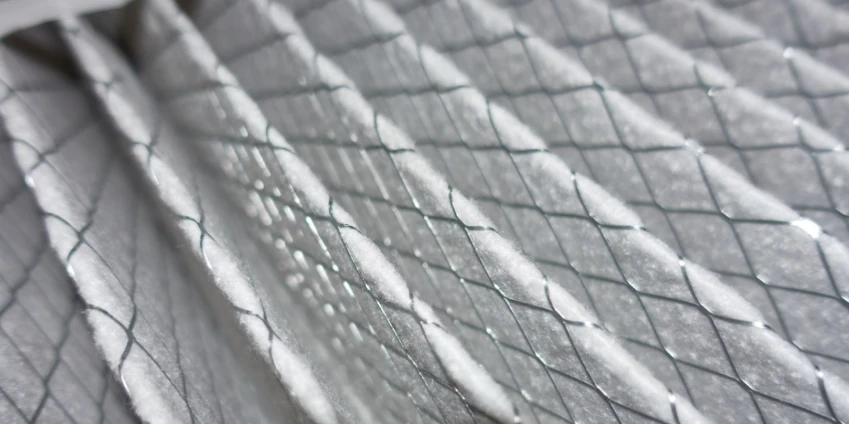
The Science Behind Air Filters and How They Work
Air filters are hidden inside your HVAC system, working quietly behind the scenes to protect the equipment and improve indoor air quality. Using the right filter and replacing it regularly keeps your air cleaner and helps the equipment run as intended. Learn the science behind how air filters work and how to choose the right one for your home.
Here’s an HVAC air filter explanation to help guide your selection based on MERV ratings:
Most residential HVAC equipment performs best with filters rated MERV 8 to 11. Households with allergies, asthma, or chronic respiratory conditions may benefit from ratings as high as MERV 13, but confirm system compatibility first.
The general guideline is to replace standard disposable filters every 30 to 90 days. If you have pets, experience allergies, or live in a dusty climate, you may want to change your filter more frequently.
For help breathing easier without sacrificing HVAC performance, reach out to an Ace Home Services location near you today.
How Air Filters Capture Airborne Particles
Air filters remove contaminants from the air as it circulates through your HVAC system. Two primary methods drive this process:• Mechanical filtration: Air passes through a dense web of fibers. Larger particles are trapped immediately, while smaller particles collide with fibers and get stuck.
• Electrostatic filtration: Some indoor air quality filters contain self-charging fibers to attract particles that would otherwise slip through. These filters can trap microscopic pollutants, including smoke and fine dust.
The Meaning Behind MERV Ratings
The American Society of Heating, Refrigerating, and Air Conditioning Engineers (ASHRAE) developed the minimum efficiency reporting value (MERV) rating system. MERV ratings range from 1 to 20. The higher the number, the better the filter is at removing small particles from the air.Here’s an HVAC air filter explanation to help guide your selection based on MERV ratings:
• Disposable fiberglass air filters (MERV 1-4): These basic filters are about 1 inch thick. They capture particles larger than 10 microns, such as lint, dust, and pollen. Their primary purpose is to protect HVAC equipment.
• Disposable pleated air filters (MERV 5-8): These filters use folded polyester or cotton material to increase surface area. They trap smaller particles such as mold spores, hair spray, and fine powder. This range works well for most households.
• Electrostatic air filters (MERV 8-10): Available in disposable and reusable forms, these filters attract particles using static charge. They capture smaller contaminants such as fine dust, and auto emissions.
• Rigid-style cartridge filters (MERV 11-12): These 6- to 12-inch-thick filters use layered pleats to capture finer particles, including some bacteria.
• High-efficiency pleated filters (MERV 13-16): These filters capture very small particles, including bacteria and smoke. They are often used in medical or specialized environments but can be installed in some homes with proper system upgrades.
• HEPA filters (MERV 17-20): Advanced high-efficiency particulate air (HEPA) filters capture at least 99.97% of particles down to 0.3 microns, including viruses, combustion smoke, and carbon dust. Most residential HVAC systems are not designed to handle HEPA filters without modifications, but you can use portable HEPA systems or install a whole-home system.
Filter Selection Affects HVAC Performance
Airflow matters as much as filtration. Higher MERV filters are denser, making them more restrictive to airflow and forcing your HVAC system to work harder. When this happens, your system uses more energy to move air, which increases wear on the blower motor and may negatively affect circulation.Most residential HVAC equipment performs best with filters rated MERV 8 to 11. Households with allergies, asthma, or chronic respiratory conditions may benefit from ratings as high as MERV 13, but confirm system compatibility first.
Regular Filter Changes Matter
Even the best filter becomes less effective when clogged. As particles accumulate, airflow drops and system strain increases. Regularly replacing your filter promotes cleaner indoor air, better system performance, and lower energy bills.The general guideline is to replace standard disposable filters every 30 to 90 days. If you have pets, experience allergies, or live in a dusty climate, you may want to change your filter more frequently.
Consider Advanced Air Quality Solutions
Some homes need more than a standard filter. For the very best indoor air quality, consider installing an upgraded filtration system or whole-home air purifier. A professional evaluation from Ace Hardware Home Services can help you select the right combination of equipment based on actual air filter science. Our team delivers reliable care backed by local expertise and the trusted Ace name. We offer straightforward recommendations, clear communication, and convenient scheduling that fits your routine.For help breathing easier without sacrificing HVAC performance, reach out to an Ace Home Services location near you today.
